Achieve facial harmony and improve breathing with a customized rhinoplasty. We utilize advanced surgical techniques to refine your nasal bridge, tip, and profile while preserving your unique ethnic identity.
Instead of simply removing tissue which can cause collapse over time, we expertly reshape and graft your native cartilage to ensure a strong, lifelong nasal foundation.
We routinely perform functional rhinoplasty (septorhinoplasty) to correct a deviated septum, enlarged turbinates, or collapsed internal valves to drastically improve airflow.
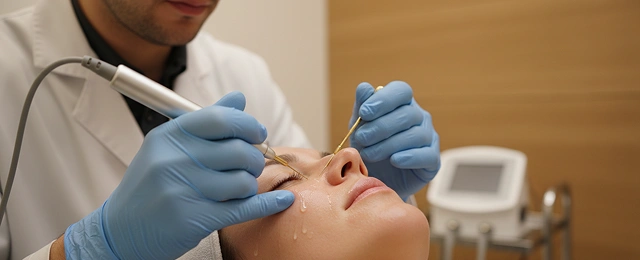
Our sterile surgical environment is designed for intricate, micro-precision facial procedures.
| Factor | Surgical Rhinoplasty | Liquid Rhinoplasty (Fillers) |
|---|---|---|
| Mechanism | Permanently reshapes underlying bone and cartilage | Injects hyaluronic acid gel under the skin |
| Size Reduction | Can reduce overall size, width, and tip bulk | Adds volume only; cannot make the nose smaller |
| Functional Fixes | Corrects deviated septums and breathing problems | Cosmetic only; no effect on breathing |
| Longevity | Permanent, lifelong results | Fades in 9 to 18 months; requires retreatments |
| Downtime | 1 to 2 weeks for initial recovery | Immediate, with potential for minor bruising |
Depending on your anatomy, your surgeon will perform either an "Open" or "Closed" rhinoplasty.
We analyze your facial proportions from multiple angles. We discuss the exact aesthetic changes you desire and examine the internal nasal structures to ensure functional breathing improvements are included.
Under general anesthesia, the surgeon makes incisions. In a Closed Rhinoplasty, incisions are hidden inside the nostrils. In an Open Rhinoplasty, a tiny incision is made across the columella (the skin between nostrils) for maximum visibility in complex cases.
The skin is gently raised. Bone and cartilage are then meticulously reduced, augmented, or rearranged. We may use cartilage grafted from your septum to build a stronger tip or straighter bridge.
If your septum is deviated, it is straightened at this time, and any internal obstructions are cleared to optimize nasal airflow.
The incisions are closed with fine sutures. A small external cast or splint is placed on the bridge to protect the new shape and reduce swelling. Internal silicone splints may be temporarily used to support the septum.
Rhinoplasty requires patience. While the cast comes off quickly, the final micro-swelling takes months to fully resolve.
Most patients are surprised to find that rhinoplasty is not highly painful. It is more accurately described as uncomfortable. The primary sensation is nasal congestion (like a severe head cold) and dull pressure during the first few days.
This depends on your anatomy and goals. Closed rhinoplasty hides all incisions inside, making it great for minor bridge adjustments. Open rhinoplasty involves a tiny incision on the columella, providing unparalleled visibility for complex tip refinement and structural grafting.
You cannot wear glasses resting on the bridge of your nose for 4 to 6 weeks after surgery, as the weight can shift the healing bones. You must tape your glasses to your forehead or switch to contact lenses during this time.
Insurance does not cover rhinoplasty performed purely for cosmetic reasons. However, if a portion of the surgery is functional (like a septoplasty to correct documented breathing issues), that specific portion may be eligible for reimbursement by your provider.
The majority of visible swelling subsides within 3 to 4 weeks, allowing you to look great in photos and social settings. However, the final 10-20% of micro-swelling in the nasal tip can take a full 12 to 18 months to completely dissipate.
If you have a severely deviated septum blocking airflow (giving you a "nasal" or congested sounding voice), correcting it may slightly clear up your vocal resonance, but it will not drastically change the fundamental sound of your voice.