Home / Services / Skin Care / Pico & Q-Switch Laser

Pico & Q-Switched Laser

Advanced laser technology for flawless skin. We utilize ultra-short picosecond and nanosecond pulses to shatter pigmentation, erase tattoos, and stimulate collagen with minimal downtime and maximum precision.

15+
Years laser expertise
5000+
Laser sessions performed
Zero
Thermal skin damage
FDA
Approved medical lasers

Shattering Pigment with Acoustic Energy

Traditional lasers rely on heat (photothermal energy) to burn away pigment, which can be risky for darker skin tones or stubborn conditions like melasma. Pico and Q-Switched lasers represent a massive leap forward. They fire at such incredible speeds (trillionths and billionths of a second) that they create a shockwave—a photoacoustic effect—that physically shatters pigment and tattoo ink into microscopic dust particles without burning the surrounding tissue.

Photoacoustic Shattering

The ultra-fast pulse shatters melanin (freckles, sun spots) and heavy tattoo ink into tiny particles, making it easy for your body's immune system to clear them away naturally.

Fractionated Rejuvenation

Using a specialized lens, the laser creates microscopic bubbles (LIOBs) beneath the skin's surface. This tricks the body into healing itself, generating massive amounts of new collagen and elastin to smooth acne scars.

Are You a Candidate?

Because Pico and Q-Switch lasers bypass the surface layer of the skin and create minimal heat, they are considered the gold standard for treating pigment on almost all skin types, including darker complexions.

Ideal Candidates

  • Suffer from stubborn melasma or severe hyperpigmentation
  • Want to remove professional or amateur tattoos
  • Have dark acne marks (PIH) or textured acne scarring
  • Looking for overall skin brightening (e.g., the "Carbon Laser Peel")
  • Seeking deep collagen stimulation without the downtime of CO2 lasers

Needs Evaluation

  • Currently experiencing active cystic acne or a skin infection in the area
  • Have recently tanned skin (sun or artificial)
  • Taking photosensitizing medications (e.g., Isotretinoin/Accutane)
  • History of severe keloid scarring (requires careful test patching)

Clinical Safety and Precision

Operating ultra-fast lasers requires specialized medical training. Our clinical team precisely calibrates the wavelength (e.g., 532nm for superficial pigment, 1064nm for deep pigment and dark skin) to ensure your treatment is safe, effective, and tailored entirely to your skin type.

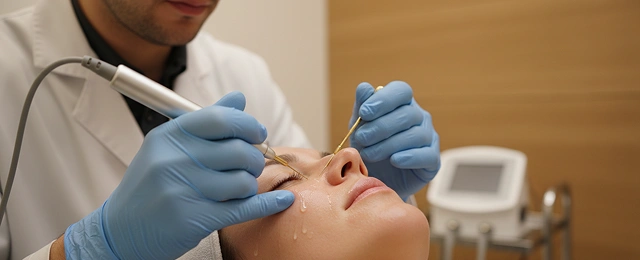
Clinical aesthetic surgical suite

Our clinic is equipped with advanced, medical-grade laser technology operated by certified professionals.

Pico/Q-Switch vs. Traditional IPL

While IPL (Intense Pulsed Light) is popular for mild redness, it relies heavily on heat. For deep pigment, melasma, and tattoos, IPL is ineffective and can actually worsen the condition.

Feature Pico & Q-Switch Lasers Traditional IPL / Thermal Lasers
Energy Delivery Photoacoustic (Shockwaves) Photothermal (Heat)
Tattoo Removal Highly effective; shatters heavy ink safely Ineffective; high risk of severe burning
Melasma Treatment Safe; breaks pigment without triggering heat-induced melanin Unsafe; the heat often makes melasma worse
Dark Skin Safety Excellent (using the 1064nm wavelength) High risk for hyperpigmentation or burns
Downtime Minimal (mild redness to temporary darkening) Can involve burns, peeling, or crusting

The Treatment Process

A fast, highly controlled procedure designed to target pigment precisely without damaging surrounding tissue.

1

Skin Assessment & Cleansing

We analyze the depth of your pigmentation or tattoo. The skin is thoroughly cleansed of all oils, makeup, and lotions to ensure the laser penetrates without interference.

2

Protective Gear & Numbing

For tattoo removal or deep fractional treatments, a topical numbing cream is applied 30 minutes prior. Both you and the technician will wear specialized protective eyewear.

3

Laser Pulses & "Frosting"

The laser is passed over the target area, delivering rapid acoustic snaps. If treating a tattoo or heavy sunspot, you will see immediate "frosting"—a white reaction caused by the rapid release of gas as the pigment shatters.

4

Cooling & Soothing

Once the area is treated, we apply cold compresses, a soothing medical-grade ointment, and strict SPF to protect the freshly treated skin.

5

Macrophage Clearance

Over the next several weeks, your body's immune cells (macrophages) will naturally absorb the shattered pigment dust and flush it out of your system, lightening the area.

Your Recovery Journey

Downtime varies based on the intensity of the treatment. Tattoo removal involves more healing than a standard facial toning session.

Day 1–2
The area will feel like a mild sunburn. For tattoo removal, the white "frosting" fades, but the area may be red and slightly swollen. Apply prescribed soothing creams.
Week 1
Treated sunspots or freckles will actually appear darker (resembling coffee grounds). This is the shattered pigment rising to the surface. It will naturally flake off.
Week 2–4
The flaking resolves, revealing clearer, brighter skin beneath. Tattoos will begin to look visibly faded as the immune system flushes the ink particles.
Month 2–3
For fractional rejuvenation treatments, deep collagen remodeling reaches its peak. Skin texture is smoother, and acne scars appear shallower and softer.

Honest About Risks, Serious About Safety

While acoustic lasers are incredibly safe, improper aftercare can lead to complications. Strict adherence to our clinical guidelines is required.

  • Sun Avoidance: Your skin will be highly sensitive to UV light. You must avoid direct sun exposure and wear SPF 50+ daily to prevent post-inflammatory hyperpigmentation.
  • Do Not Pick: As pigment darkens and flakes, picking or scratching the scabs can cause permanent scarring or uneven pigmentation. Allow it to shed naturally.
  • Blistering: Minor blistering is a normal, expected reaction after aggressive tattoo removal sessions. Do not pop them; they will heal on their own.
  • Multiple Sessions: Pigment and tattoos are layered. It is medically impossible to remove deep pigment entirely in one session without causing severe damage. Patience through multiple sessions is required.
PROVEN RESULTS

Pico Laser Results

×
After Before
Before After

Frequently Asked Questions

What is the difference between Pico and Q-Switch?

Both are acoustic lasers. A Q-Switch laser fires in nanoseconds (billionths of a second), which is excellent for standard pigment and tattoos. A Pico laser fires in picoseconds (trillionths of a second), which creates a stronger shockwave, shattering pigment into even finer dust for faster clearance.

Does tattoo removal hurt?

Tattoo removal is uncomfortable, often described as the snapping of a hot rubber band against the skin. However, we use strong topical numbing creams and cooling systems to make the procedure highly tolerable, and the actual laser time is very fast.

Can this cure my melasma?

Melasma is a chronic hormonal condition. While Pico and Q-Switch lasers are the safest way to break up and clear existing melasma pigment without triggering heat-induced worsening, they do not cure the underlying hormonal cause. Maintenance sessions and strict sun protection are required.

How many sessions will I need?

For facial rejuvenation and mild freckles, 3 to 5 sessions are typical. For professional tattoos, expect anywhere from 6 to 12+ sessions, depending on the ink density, depth, colors, and your body's immune response.

Is it safe for dark skin?

Yes. By utilizing the 1064nm wavelength setting on our Q-Switch and Pico lasers, the energy bypasses the superficial melanin in the epidermis and safely targets deep pigment, making it the safest laser option for darker skin tones.

Will my face peel?

You will not experience the heavy, sheets-of-skin peeling associated with chemical peels. Instead, targeted spots (like freckles) will simply darken and lightly flake off over the course of a week.

Book Consultation +92 336 5269417