Home / Services / Beard Transplant

Beard Transplantation

Restore patchy or thinning facial hair with a permanent, natural-looking beard transplant. Using micro-precision follicular extraction, we design a dense, masculine beard that seamlessly blends with your facial features.

15+
Years of surgical experience
2000+
Facial hair procedures
100%
Custom facial mapping
ISO-9001
Certified clinical facility

Crafting a Defined, Masculine Jawline

A full beard enhances facial symmetry and strengthens the jawline, but genetics, scarring, or trauma can cause patchy, thin, or uneven growth. Restoring facial hair requires an exceptional understanding of native hair angulation—beard hairs grow at highly specific angles that change continuously along the cheeks, jawline, and neck. Our senior surgical team replicates this exact directional flow for a dense, untraceable result.

Caliber Matching

We selectively harvest single and double-hair follicular units from the donor area that most closely match the coarse, robust texture of natural beard hair.

Anatomical Angulation

Incision sites are made at highly acute angles across the cheeks and jaw, ensuring the transplanted hairs lay flat against the skin rather than pointing outward.

Are You a Candidate for Beard Restoration?

Beard transplants are highly versatile, offering solutions for complete reconstruction, cosmetic density enhancement, or reconstructive camouflage over scar tissue.

Ideal Candidates

  • Genetic inability to grow a full, connected beard
  • Patchiness on the cheeks, jawline, or neck
  • Facial scarring from acne, burns, trauma, or surgery
  • Desire to achieve specific styles like a goatee or full stubble
  • Good general health with a stable scalp donor supply

Needs Evaluation

  • Active Alopecia Areata (autoimmune hair loss)
  • Unrealistic expectations regarding immediate, same-week density
  • Severe, unhealed keloid scarring on the face
  • Lack of viable, healthy donor hair on the back of the scalp

Pain-Free Precision

The face is highly sensitive, which is why your comfort is our priority. We administer specialized, computerized local anesthesia. After a brief initial numbness, the entirety of your 4-to-8 hour procedure will be completely pain-free, allowing you to relax, watch a film, or sleep while we work.

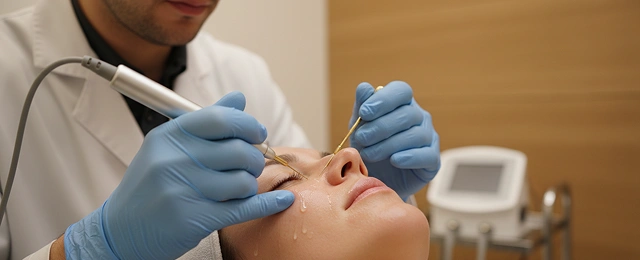
Clinical setup for facial hair restoration

Our sterile surgical environment is designed for intricate, micro-precision facial procedures.

Transplants vs. Topical Serums (Minoxidil)

While topical growth serums can encourage existing "peach fuzz" to thicken temporarily, they cannot create new hair follicles in completely barren areas or over scar tissue. A transplant is a permanent, structural solution.

Factor Beard Transplant Topical Serums (e.g., Minoxidil)
Mechanism Relocates healthy, living follicles to the face Stimulates blood flow to existing, fine hairs
Scar Camouflage Highly effective; grows hair directly through scars Ineffective; cannot generate hair on scar tissue
Longevity Permanent, lifelong results Reverses if you stop applying the product
Design Control 100% control over shape, density, and cheek lines Unpredictable growth patterns
Maintenance Standard trimming and shaving like normal facial hair Requires daily application forever

The Surgical Process

A highly refined out-patient procedure designed for maximum density and aesthetic harmony.

1

Consultation & Custom Mapping

We work with you to draw precise surgical boundaries along your cheeks, jaw, and neck that complement your facial structure. We do not proceed until you are completely satisfied with the proposed shape.

2

Donor Extraction (FUE)

Using an ultra-fine micro-punch, we extract healthy follicles—usually from the back of the scalp—leaving virtually undetectable micro-dots that heal entirely within a few days.

3

Micro-Slit Creation

The surgeon makes microscopic incisions across the beard area. This critical step dictates the direction and angle of the new hair, ensuring it flows naturally downward and hugs the jawline.

4

Precision Placement (Dense Packing)

Follicles are densely packed into the recipient sites by hand. We use single-hair grafts for the softer upper cheek lines and double-hair grafts for bulk and density along the jaw and chin.

5

Post-Procedure Briefing

You leave the clinic the same day with a specialized healing kit. We provide strict instructions on how to wash your face, sleep, and protect the newly placed grafts during the crucial first week.

Your Recovery Journey

The face is highly vascular and heals rapidly, though initial swelling and scabbing are part of the process.

Day 1–3
Noticeable swelling of the lower face is expected. Tiny crusts form around each graft. You will need to sleep elevated and eat soft foods to minimize jaw movement.
Day 5–7
Swelling subsides significantly. The scabs will dry up and begin to flake off naturally when you gently wash the area. You can usually return to work.
Week 3–4
"Shock loss" occurs—the transplanted hairs shed. This is a normal part of the follicle resetting its growth cycle; the living root remains secure inside the skin.
Month 3–4
New hair starts emerging. It may initially feel slightly finer but will mature, thicken, and darken over the coming months.
Month 9–12
Final density is achieved. The hair is fully mature, allowing you to grow a full beard, style it, or shave it completely—it will always grow back.

Honest About Risks, Serious About Safety

Any procedure on the face requires exacting clinical standards to prevent infection and ensure aesthetic success. We perform every session in our ISO-9001 certified facility under strict protocols.

  • Post-operative swelling of the cheeks and neck is almost universal but temporary, usually resolving fully by day 5.
  • Because scalp hair is used as the donor, the beard may retain the scalp's faster growth cycle and require more frequent trimming initially.
  • Infection is rare but prevented by strictly following our aftercare protocols regarding washing and keeping the area clean.
  • Occasional ingrown hairs or minor pimples may appear around month 3 as the new, coarse hairs push through the facial skin.
PROVEN RESULTS

Beard Transplant Results

×
After Before
Before After

Frequently Asked Questions

Where do you harvest the donor hair from?

We generally use the back and sides of the scalp (the safe donor zone) because it offers a large supply of permanent, DHT-resistant hair that closely matches beard caliber when fully grown.

Will I be able to shave normally?

Yes. Once the transplanted hair is fully matured (around the 9 to 12-month mark), it behaves exactly like native facial hair. You can trim it with clippers, style it, or wet-shave it down to the skin—it will always grow back.

Is the procedure painful?

We use a computerized local anesthetic to numb the face and scalp before the procedure begins. While the initial administration causes a brief pinch, the entire surgical area becomes profoundly numb for the duration of the surgery.

Can this cover facial scars or acne scarring?

Absolutely. Beard transplants are one of the most effective ways to permanently camouflage scars from trauma, burns, or severe acne on the lower face. We routinely implant follicles directly into scar tissue.

How many grafts are typically needed?

It depends entirely on your goals. Filling in minor cheek patches might require 500-1000 grafts, while building a full, dense beard from scratch can require 2,500 to 4,000+ grafts. We provide an exact quote during your consultation.

When can I return to work?

Due to the visible scabbing and swelling on the face, most patients prefer to take 5 to 7 days off work to recover privately. After a week, the scabs flake off, leaving only faint redness resembling a sunburn.

WhatsApp Us +92 336 5269417