Home / Services / Female Hair Transplant

Female Hair Transplantation

Specialized, no-shave hair restoration designed specifically for women. Restore volume, lower a high hairline, and fill in thinning areas using micro-precision techniques that protect existing hair and deliver natural, permanent density.

15+
Years of surgical experience
2000+
Female procedures performed
Discrete
No-shave / hidden options
ISO-9001
Certified clinical facility

A Delicate Approach to Female Hair Loss

Female pattern hair loss differs fundamentally from male pattern baldness. It often presents as diffuse thinning across the part line, widening of the crown, or a naturally high forehead, rather than a receding hairline. Because of this, our approach focuses on high-density packing without damaging surrounding fragile follicles, often utilizing entirely "hidden-shave" techniques so you can return to your life discreetly and confidently.

Hidden-Shave Technique

Unlike traditional procedures, we only trim a small "window" at the back of the head to harvest grafts. This area is easily concealed immediately afterward by letting your long hair fall naturally over it.

DHI Precision Implantation

We use specialized Direct Hair Implantation (DHI) pens to meticulously slide new grafts between your existing native hairs. This prevents trauma and minimizes the risk of shock loss.

Are You a Candidate for a Female Hair Transplant?

Proper diagnosis is crucial. While a transplant is a permanent solution for structural hair loss, it must be performed on candidates with a stable donor area and a clear, treatable pattern of thinning.

Ideal Candidates

  • Diffuse thinning concentrated along the parting line (Ludwig scale)
  • Traction alopecia from tight hairstyles, braids, or extensions
  • A naturally high or wide forehead seeking hairline lowering
  • Fully healed scarring alopecia (from trauma or prior face-lift surgery)
  • Stable, dense donor hair at the back of the scalp

Needs Medical Evaluation

  • Active, unmanaged thyroid conditions or hormonal imbalances (PCOS)
  • Diffuse Unpatterned Alopecia (DUPA), where the donor hair is also actively thinning
  • Rapid, sudden hair shedding (Telogen Effluvium) induced by stress or illness
  • Active autoimmune conditions like Alopecia Areata

A Private, Specialized Clinical Setting

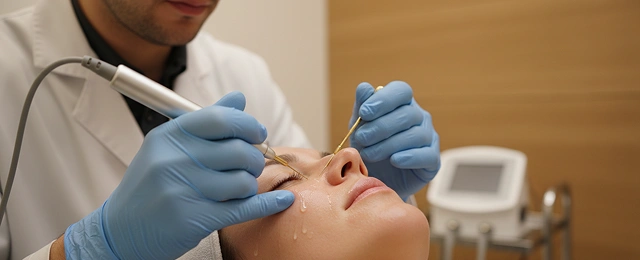
We understand that hair loss for women is deeply personal. Our consultations and procedures are highly confidential, taking place in a private, sterile ISO-9001 certified suite. We use computerized, painless anesthesia so you can remain comfortable, watch a movie, or rest during your transformation.

Clinical suite designed for patient comfort

Our sterile surgical environment is built to maximize privacy, safety, and comfort.

Transplantation vs. Non-Surgical Treatments

Treatments like PRP (Platelet-Rich Plasma) and Minoxidil are excellent for strengthening existing, miniaturized hairs, but they cannot regrow hair where the follicle has completely died or restore a naturally high hairline. A transplant physically moves healthy follicles to where you need them most.

Factor Female Hair Transplant PRP / Minoxidil
Mechanism Physically relocates permanent, healthy follicles Stimulates blood flow to existing, weakened hair
Hairline Lowering Highly effective; creates a new aesthetic boundary Ineffective; cannot grow hair on bare skin
Longevity Permanent, lifelong results Reverses if treatment or applications are stopped
Density Potential High, structural density added to thinning areas Variable; mostly thickening of fine hairs
Maintenance Treat it like your normal hair (wash, dye, cut) Requires continuous, ongoing clinic visits or daily use

The Surgical Process

A meticulously planned procedure focusing on density and protecting your existing hair.

1

Trichoscopy & Female Facial Mapping

Using digital trichoscopy, we analyze your scalp to calculate precise donor capacity. If lowering a hairline, we map a softer, naturally rounded female hairline boundary based on facial symmetry.

2

Hidden Extraction

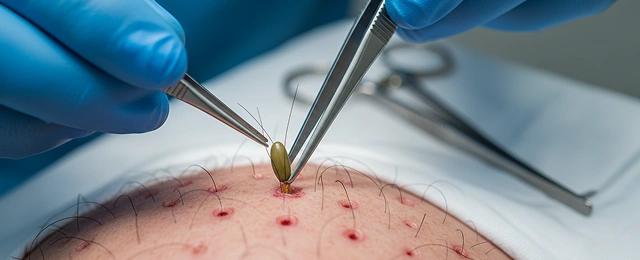
We shave a small, rectangular window at the back of the head that is completely hidden once your hair is let down. Using an ultra-fine punch, individual follicular units are carefully extracted painlessly.

3

DHI Implantation

Using Choi Implanter Pens, the surgeon slides the new follicles directly into the thinning areas without needing to create prior slits. This bypasses the trauma of traditional methods and protects the surrounding healthy hairs.

4

Angulation & Cowlick Matching

Female hair grows at distinct angles, especially around the temples and part line. Every graft is angled perfectly to follow the natural sweeping motion of your existing hair.

5

Post-Procedure Wash & Styling Briefing

Before you leave, our clinical team washes your hair and teaches you how to maintain your long hair without disturbing the new grafts. We also schedule your 30-day medical review.

Your Recovery Journey

What to expect as your new hair integrates and begins its natural growth cycle.

Day 1–3
Mild swelling may occur along the forehead. You will need to sleep on your back, slightly elevated. Your long hair will easily hide the donor area.
Week 1–2
First medicated wash at our clinic. Tiny scabs around the grafts will dry and flake off naturally by day 10. The donor area heals completely.
Week 3–6
"Shock loss" is normal—the transplanted hairs shed temporarily before entering a new growth cycle. Some native hairs may also shed temporarily but will return.
Month 4–6
New hair starts emerging. It will be thin initially, resembling baby hair, but will gradually thicken to match your native texture.
Month 10–12
Final cosmetic density is achieved. You can dye, curl, cut, and style your hair just as you normally would.

Honest About Risks, Serious About Safety

Female hair transplantation requires delicate skill to prevent damaging native follicles. We perform every procedure under the direct supervision of experienced surgeons in an ISO-certified clinical environment.

  • "Shock loss" (temporary shedding of native hair) is more common in women due to the density of existing hair, but it is temporary and resolves in a few months.
  • Swelling around the forehead and eyes may occur on days 2-4 and naturally subsides without intervention.
  • Sterile tools and precise DHI implanters are used to minimize trauma to surrounding tissues and prevent infection.
  • Graft survival heavily depends on post-operative care. Brushing or pulling the hair aggressively in the first two weeks can dislodge grafts.
PROVEN RESULTS

Female Transplant Results

×
After Before
Before After

Frequently Asked Questions

Do I have to shave my entire head?

No. For female patients, we use a "hidden-shave" technique. Only a small, horizontal strip at the back of the head is trimmed, which is instantly concealed by the hair falling above it.

Will the surgery damage my existing hair?

By using the DHI (Direct Hair Implantation) method, we avoid making pre-made incisions. We delicately slide the new grafts between your existing hairs using a micro-pen, significantly reducing trauma and protecting native follicles.

Can this procedure fix a naturally high forehead?

Yes. Hairline lowering is one of the most common reasons women seek a transplant. We design a soft, feminine hairline with natural irregularities and single-hair grafts at the front, permanently reducing the size of the forehead.

Is the procedure painful?

No. We use a computerized local anesthetic system that minimizes the initial pinch. Once the scalp is numb, you will feel no pain for the entirety of the 5-to-8 hour procedure.

Can a transplant reverse Traction Alopecia?

Yes. If you have permanent hair loss along the edges or temples due to years of tight braids, weaves, or extensions, a transplant is the only permanent way to physically restore those damaged follicles.

When can I dye my hair again?

We recommend avoiding chemical dyes, bleach, or harsh styling products for at least 4 to 6 weeks after the procedure to allow the scalp to fully heal and the grafts to anchor securely.

Book Confidential Consult +92 336 5269417